“The energy transition is entering a different phase. We know much more clearly which technologies and other solutions can help us decarbonise our economies. The challenge now is deploying them at the scale and pace required.” - Steven van Rijswijk, CEO of ING.
The message of the paper is simple: the next phase of the energy transition is about turning ambition into action. Electrification can play a major role, but capital alone is not enough. Only if technology, infrastructure, policy, demand and finance move together electrification can be made bankable at the speed and scale required.
Here are the five things to know when it comes to banking on electrification:
1. Electrification is a big part of the energy transition
From the cars we drive to the way we heat our homes and power industry, more of our economy can run on electricity instead of fossil fuels. If that electricity comes from renewable sources, it can significantly reduce emissions.
The opportunity is already substantial. Research referenced in the paper suggests that up to 75 percent of global energy demand could be electrified using technologies already available today.
2. The technology is there. Making it work at scale is harder
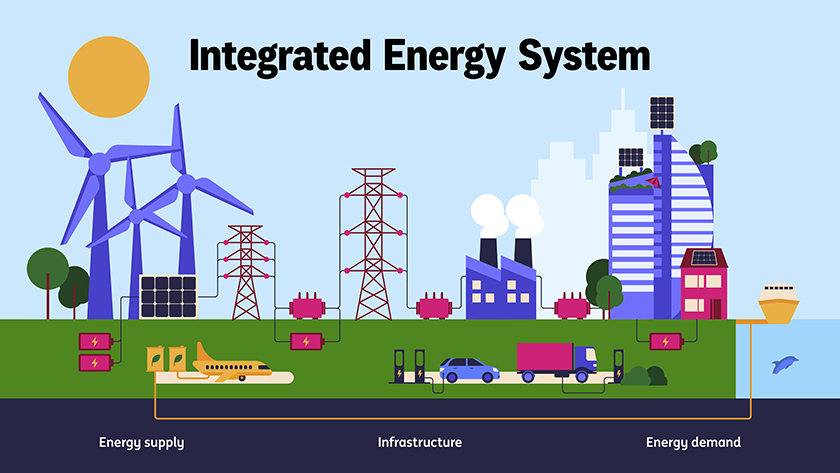
Producing more renewable electricity is only part of the story. We also need the grids, batteries, charging points and other infrastructure to deliver renewable electricity where and when it is needed.
And projects need to make economic sense. ING’s experience shows three things are particularly important: proven technology, supportive policies and enough certainty about future revenues. When these come together, it becomes easier to attract investment that supports the growth of clean energy production and use.
3. We need to look at the whole system
Electrification is a bit like a puzzle: the pieces depend on each other.
More electric vehicles, for example, need more charging infrastructure. More renewable power requires stronger grids and more storage. And a factory cannot switch to electricity if the grid cannot provide the power it needs or new technologies aren’t mature enough.
That means governments, businesses, energy companies and financial institutions need to move together. The paper identifies three priorities for joint action: think about electrification as one connected system, share risks to help new markets grow, and create stable policies that give investors confidence.
4. The challenges are different in every sector
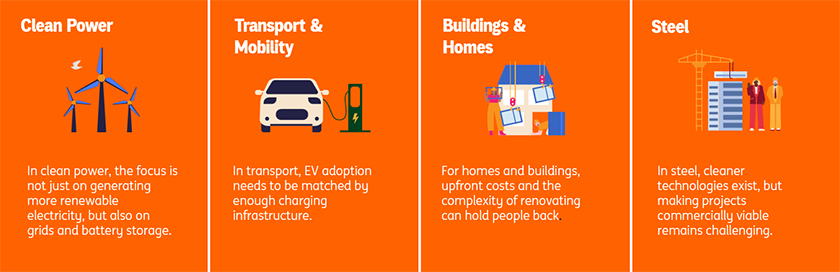
There is no one-size-fits-all solution. The paper explores how the challenges play out across clean power, transport and mobility, buildings and homes, and steel. ING is already financing solutions across these areas, from battery storage and EV charging networks to heat pumps and energy-efficient buildings. These projects can teach us about overcoming the obstacles to turning new technologies into investable solutions.
5. There is capital available, but finance can't do it alone
Banks can play a role in accelerating the energy transition. Beyond providing capital, we can help businesses turn plans into investable projects. But financing alone is not enough. Predictable policies, credible demand and effective risk-sharing are also needed to help projects move forward.
Read the full paper
At ING, our ambition is to help our clients in their transition to a low-carbon economy – because it matters to us as a bank, to our clients and to society. Progress on the transition depends on governments, businesses and financial institutions working together to overcome barriers and create the conditions for investment at scale. COP31 is an opportunity to build momentum behind this shared effort. That is why ING will be at COP31, represented by CEO Steven van Rijswijk, Head of Wholesale Banking Ljiljana Čortan, and Head of Sustainability Anne-Sophie Castelnau. We will also meet with our clients to identify how we can collectively accelerate the electrification of the real economy.
Want to know what’s happening when? See ING’s COP31 agenda (PDF 0,3 MB).
Society is transitioning to a low-carbon economy. So are our clients, and so is ING. We finance a lot of sustainable activities, but we still finance more that's not. Learn more about our progress: our climate approach.
This document is not intended to be distributed in the United States.